
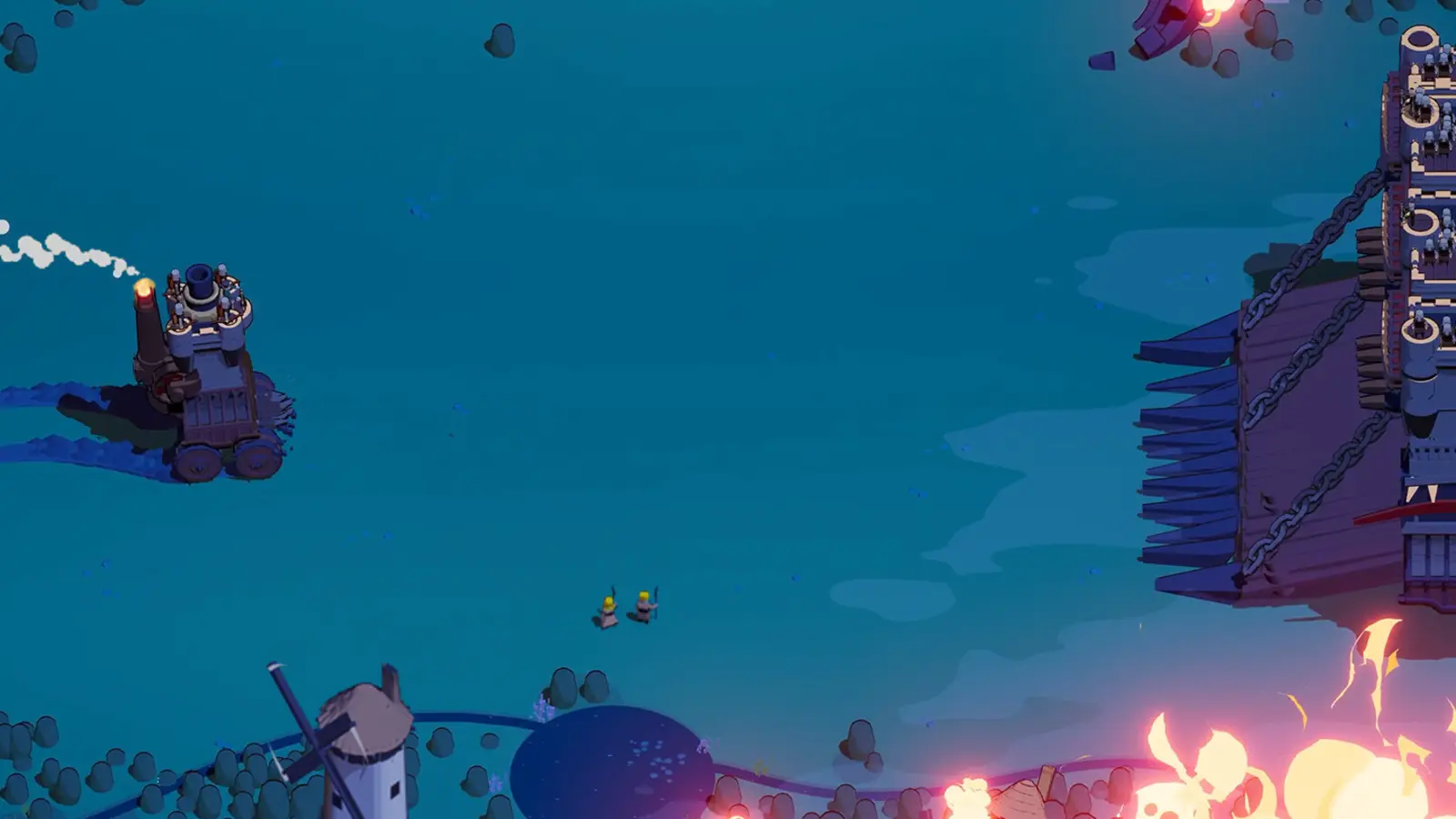
Spend for a playable combination
- Reviewed
- Scope
- Early Access; see version notes
Buy the module that makes your next intended setup playable. In Wanderburg, that can mean a second compatible Top module, an attack that shares bonuses with your existing damage, or a missing tool that addresses how your last run failed. A universal shopping list ignores the equipment and challenges already available on your account.
A useful early order is to resolve a slot requirement, complete one coherent damage plan, then add alternatives. This is a spending recommendation, not an in-game rule or a claim that one module is strongest everywhere. The sections below show how to apply it without confusing challenge completion, Silver purchases, and the upgrades gained during a run.
Check the challenge, purchase, and slot separately
Start at the module's locked entry and read its condition. Some recorded unlocks depend on progressing another module; others involve an overall action counter. The exact wording determines the next task. A requirement to reach a level is different from a requirement to earn Silver, even when both prevent you from using the same item.
After completing the challenge, check whether the module still needs to be purchased. Recorded early play repeatedly returns to the selection screen to spend Silver after making an item available. The notification that something has unlocked should prompt a purchase-state check, not an assumption that it has already joined your owned choices.
Finally, inspect the slot. A module that fits a Side position does not become a Top module because it belongs to the same damage family. Your intended chassis determines which purchases can contribute to its loadout. This compatibility check should come before spending, especially when switching vehicles.
| Check | Question to answer | Next action |
|---|---|---|
| Challenge | Has the stated condition been completed? | Plan a run that can satisfy the actual wording. |
| Purchase | Is the item owned or only available to buy? | Compare the Silver balance with the displayed cost. |
| Slot | Can the intended vehicle use this module? | Match the module position to the chassis. |
| Purpose | What problem will this purchase solve? | Choose a test for the next run. |
These checks prevent a common expensive mistake: buying something appealing that neither fills the missing position nor helps the build you were saving for.
Make a blocked vehicle usable before adding variety
Spiderburg provides a concrete example of a purchase that has immediate practical value. Its loadout uses two Top module slots and no Side slots. Recorded progression shows the vehicle becoming available while the account is warned to buy another Top module before playing it.
If that is your situation, your next useful purchase is another eligible Top option you can afford and want to use. Another Side weapon, a new captain, or an artifact does not meet the missing-module requirement. First confirm what you own, then inspect the available Top choices and their conditions.
That does not mean every player should rush Spiderburg. If you are enjoying a vehicle that already has usable equipment, the same Silver may contribute more to improving its setup. The point is to resolve the actual obstacle in front of your chosen plan, rather than following a purchase order written for a different account.
The Spiderburg slot and purchase guide explains the distinction between obtaining the vehicle and being ready to start with it. Its initial unlock condition remains a separate evidence gap; do not treat the two-Top requirement as the full progression gate.
Choose the first new attack around a familiar one
If your current vehicle is usable, identify the attack you understand best. Consider a second module that supports the same practical plan. Shared bonuses can make later artifact choices more useful, while familiar positioning reduces the amount you need to learn in the opening.
For an arrow direction, another compatible arrow attack can let one relevant bonus support more of the setup. For a cannon direction, another cannon can help only if you can place its firing angle on the target. For a summon direction, additional unit pressure may fit the plan, but you still need enough movement and survival to stay alive while the units fight.
Do not reduce compatibility to damage type alone. Consider when the attacks work. Two abilities that both require a dangerous close approach may leave you with the same weakness during cooldowns. An automatic attack that covers your retreat can contribute a different function even when it does not create the neatest single-family setup.
The build comparison offers several directions rather than an unsupported universal ranking. Use it to choose a plan you can start now. Purchasing every component of a distant endgame example before testing any of them can consume your budget without improving the next attempt.
Use the Side Cannons challenge as a focused unlock run
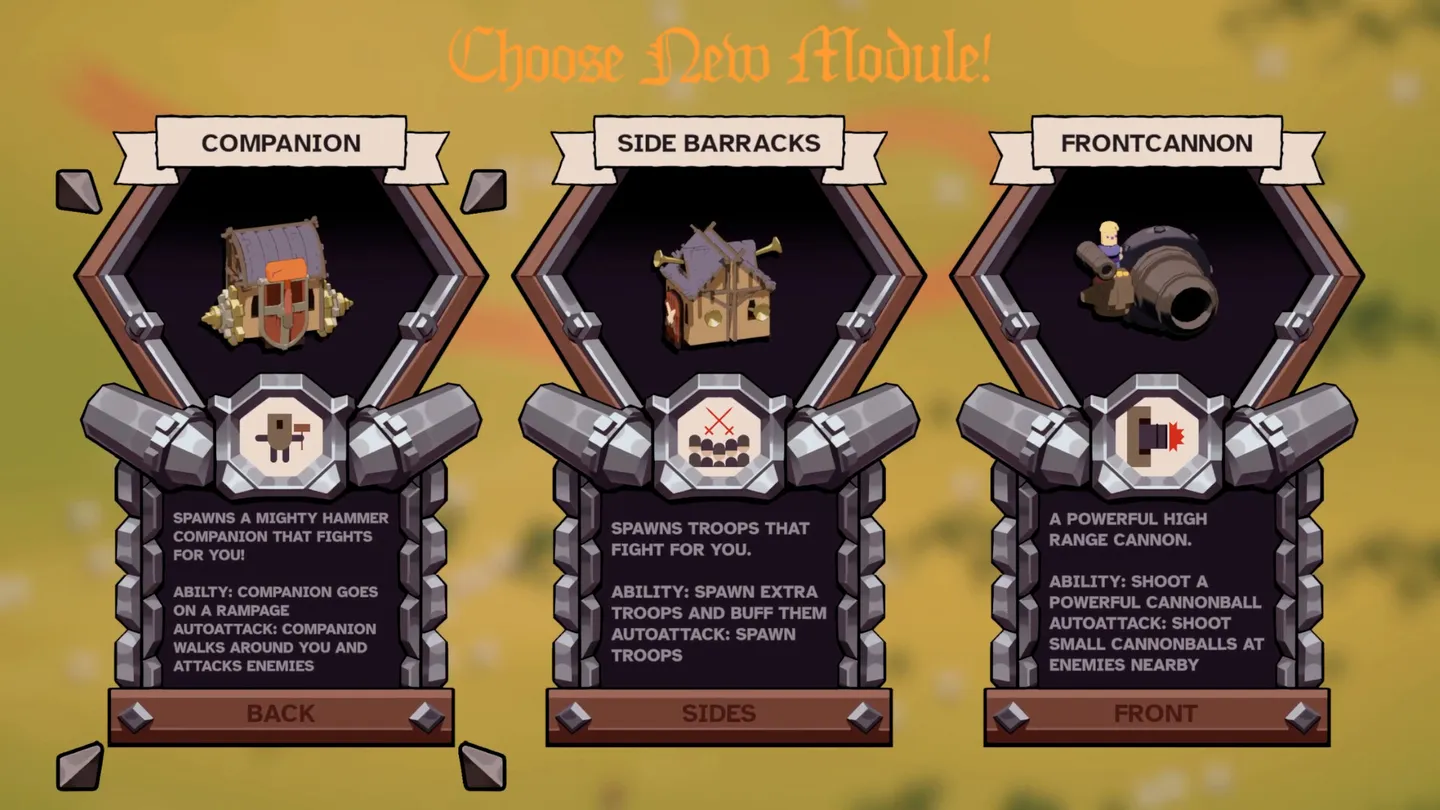
Recorded early progression reads a condition to reach upgrade level 10 with Side Cannons to unlock Front Cannon. This is a concrete example of how one familiar module can open another. Treat the level as the condition reported in that recording and verify the current locked entry before planning around it.
If the same condition appears in your client, start with a vehicle that can use Side Cannons and make the run strong enough to keep collecting upgrades. Prioritize suitable Side Cannons choices when they appear, while preserving enough survival to reach the target level. There is little value in forcing one more upgrade if the castle cannot finish the next dangerous section.
Do not assume every upgrade affects the same part of the weapon. A condition about the module's level concerns its progress, while your combat effectiveness still depends on whether you are improving the automatic attack, active ability, or another useful property. Choose an upgrade that advances the challenge and helps the run whenever possible.
After the condition is complete, inspect Front Cannon's purchase entry. The recorded player later looks for it in the Silver unlock menu; the challenge and spending step are distinct. The Side Cannons guide covers the broadside positioning that helps make the prerequisite run manageable.
Consider Archer Tower when an arrow setup is the goal
The archived early run also reads a level-five Archer Crew condition for making Archer Tower available. That supports a practical direction for an account already using arrows, but it is not evidence that every player should purchase the tower first regardless of vehicle or preference.
Check the condition shown in your current client. If it matches, build the attempt around keeping Archer Crew useful long enough to reach the required progress. When the condition is satisfied, inspect the Silver purchase rather than assuming the next reward screen must immediately offer the newly available item.
Before buying, think about what the tower adds to your intended setup. A second arrow component can cooperate with arrow-related artifacts, and a Top option may matter for a chassis requiring more owned Top modules. Those are specific reasons to value the purchase. “It appeared in a strong video” is less useful because that video may include upgrades and artifacts your opening does not have.
The turrets and arrows route separates the coordinated damage plan from an exact guaranteed sequence. If an early arrow setup does not yet have every desired part, use a compatible fallback rather than spending the whole run waiting for one unavailable choice.
Buy for the failure that equipment can actually solve
A new damage module is a good candidate when the last attempt had clear firing opportunities but could not finish targets fast enough. It is a weaker answer when you missed most activations, drove into blocked spaces, or ignored a ready ability.
Review a recent failure before purchasing. If ordinary enemies repeatedly close your exit while your main ability recharges, look for equipment that contributes during that downtime. If a boss is easy to approach but survives too long, focus on damage you can apply reliably. If the vehicle cannot leave danger, consider whether a movement-related tool fits the loadout and your way of playing.
Do not buy a module solely because the recording calls it powerful. Its active attack may require a different approach than you prefer, or the shown result may rely on upgrades acquired much later. A module's role in a complete run does not prove that its starting form will solve your opening problem.
Sometimes the correct next action costs no Silver. Practicing the firing angle of an owned cannon or changing the order in which you use abilities can make more difference than another purchase. Use a new unlock when it gives you a capability or combination you actually need.
Expand the pool with a reason
Buying modules expands the choices available to your account. The beginner material favors this because a narrow collection limits variety. Other recorded play describes the frustration of trying to assemble a particular setup after unlocking many options. Both experiences can be true.
The benefit of a new purchase is more than the next random offer: it may enable a starting choice or a different vehicle plan. The cost is that a wider collection does not guarantee that the specific module you want will appear when you want it. Do not assume “owned” means “certain to be offered next.”
There is no verified probability table here. The recordings do not establish equal weighting, the exact size of every selection pool, or a universal formula for how one purchase changes the chance of a particular card. The upgrade pool dilution guide explains that limit.
A sensible compromise is to complete one useful family of choices before buying unrelated options merely to fill the collection. If experimentation itself is your goal, a broader purchase is reasonable; just accept that the next attempt may need a flexible plan. Do not reset progress or attempt to erase purchases based on an unverified promise of a perfect reward pool.
Include the newer reroll thresholds in the decision
Hotfix 0.9.10 added additional rerolls based on unlocked collections: every six Modules grants a New Module Reroll, and every six Artifacts grants an Artifact Reroll. This changes the context of older footage that complains about having very few rerolls.
Keep the two counters separate. Buying modules contributes to the module threshold; buying artifacts contributes to the artifact threshold. The official wording does not mean every six combined purchases automatically increase both counters, nor does it promise an extra reroll on every ordinary upgrade screen.
If you are close to a module threshold, a useful purchase can have two benefits: another playable option and the relevant additional reroll. That can be a reason to prefer it over an equally useful alternative. It is not a reason to spend the entire budget on unsuitable modules while leaving the core of your intended loadout unowned.
Check your collection and the next run's counter after purchasing. If the expected change is unclear, record the exact owned count and screen rather than combining different reroll types. The reroll explanation covers the permanent unlock thresholds and the distinction between selection screens.
Keep enough Silver for the complete next setup
Before paying, total the purchases needed to make the plan usable. A vehicle, its required modules, and a desired captain may compete for the same balance. Buying the vehicle first can leave you with an attractive selection that you still cannot use effectively.
Prioritize the necessary parts and distinguish them from optional refinements. If the chassis cannot start without another compatible module, that module is necessary. If a different captain would merely make the same functioning setup more specialized, it can usually wait while you learn the equipment.
Use current displayed prices. The recorded Tankenburg route includes a 5,000-Silver price, but that is not a price list for every vehicle or version. A module guide should not fill unknown costs with guesses merely to make a shopping table look complete.
If the balance is short, choose an unfinished objective you can complete with what you already own. The Silver farming guide helps separate earning the missing currency from satisfying an incomplete unlock condition. This keeps the farming run tied to a specific purchase rather than an open-ended grind.
Test the purchase before making the next one
Use the newly owned module in a familiar environment with as much of the previous setup unchanged as practical. The first test should answer whether you understand its automatic behavior, its active ability, and the position it needs against enemies.
Observe one early fight, one crowded escape, and a boss encounter if the run reaches one. Does the new module cover a weakness or compete with an existing attack for the same dangerous position? Does it remain useful when its active ability is unavailable? Are your artifact choices now supporting more of the setup?
A disappointing first attempt does not necessarily mean the purchase was wrong. Recorded advice repeatedly notes that unfamiliar weapon handling can make a module feel weak until the player learns it. Make one adjustment to how you use it before concluding that you need another item.
If the module still does not suit your plan, you have learned something specific about the next purchase. Look for a different function, not simply a rarer-looking name. Keep a usable alternative loadout available so the account can continue earning while you experiment.
A practical order for the next three decisions
First, remove the obstacle that prevents the chosen vehicle from starting or the main attack from functioning. Second, add a compatible component that supports the same damage plan or covers its downtime. Third, consider a different option for a stage or failure the first setup handles poorly.
This order is deliberately conditional. An account with a complete arrow setup needs a different next purchase from an account missing a second Top module. A player who wants variety may also choose a new family earlier than someone trying to clear one stubborn stage.
Before every purchase, finish this sentence: “I will use this module on this vehicle to solve this problem.” If the answer is specific, the purchase has a testable purpose. If the answer is only that it might be useful someday, keep the Silver until you have a clearer plan or deliberately decide that exploring a new toy is the goal.